Datum Foundry Nine

Work · Five products, built in-house

What we’ve built

Five products, all our own. A multiplayer murder mystery hosted by an AI butler — built twice, from one brief, by two different models. A space trading simulation with a market that actually moves. Two routes into 3D visualisation, one priced per property and one built for portfolios. A desktop workspace for running six coding agents at once. We build for clients too — same hands, same methods.

services@datumfoundrynine.co.uk

Cecil — one brief, two independent builds

In playtesting

We gave the same murder-mystery brief to two AI models and let each one build its own game, end to end.

Two models, one brief, no shared code: each wrote its own story and the engine underneath it, and the two work nothing alike under the hood. Both are live and playable — an AI butler hosting a party of human players across one shared screen and their own phones. We’re playtesting the pair this month and releasing one on the evidence, not the hunch; the other is retired. More stories follow on whichever engine earns it.

What it proves

  • Parallel AI implementation
  • Evidence-based build selection
  • Real-time multiplayer state
  • AI character voice and dialogue
Build oneThe Last Toast at Ashcombe Hall
Build twoA Nightcap at Ravensmere
Two builds, side by side. Both sites run a spoiler-free demo — play them in either order.

3D Property Visualisation

Service · £50 per property

Photographs and floorplans in, twenty consistent 3D room views out, for fifty pounds.

A productised service for estate agents. £50 per property covers one ground floor and one upper floor, up to 20 final rendered images — consistent 3D room views and furnished layout illustrations, all generated from a single 3D reconstruction rather than assembled shot by shot. Estimated turnaround is 1–2 working days for a standard property, following receipt of complete reference materials and timely draft approval.

What it proves

  • 3D reconstruction
  • Productised fixed-price delivery
  • Property marketing imagery
  • Repeatable output
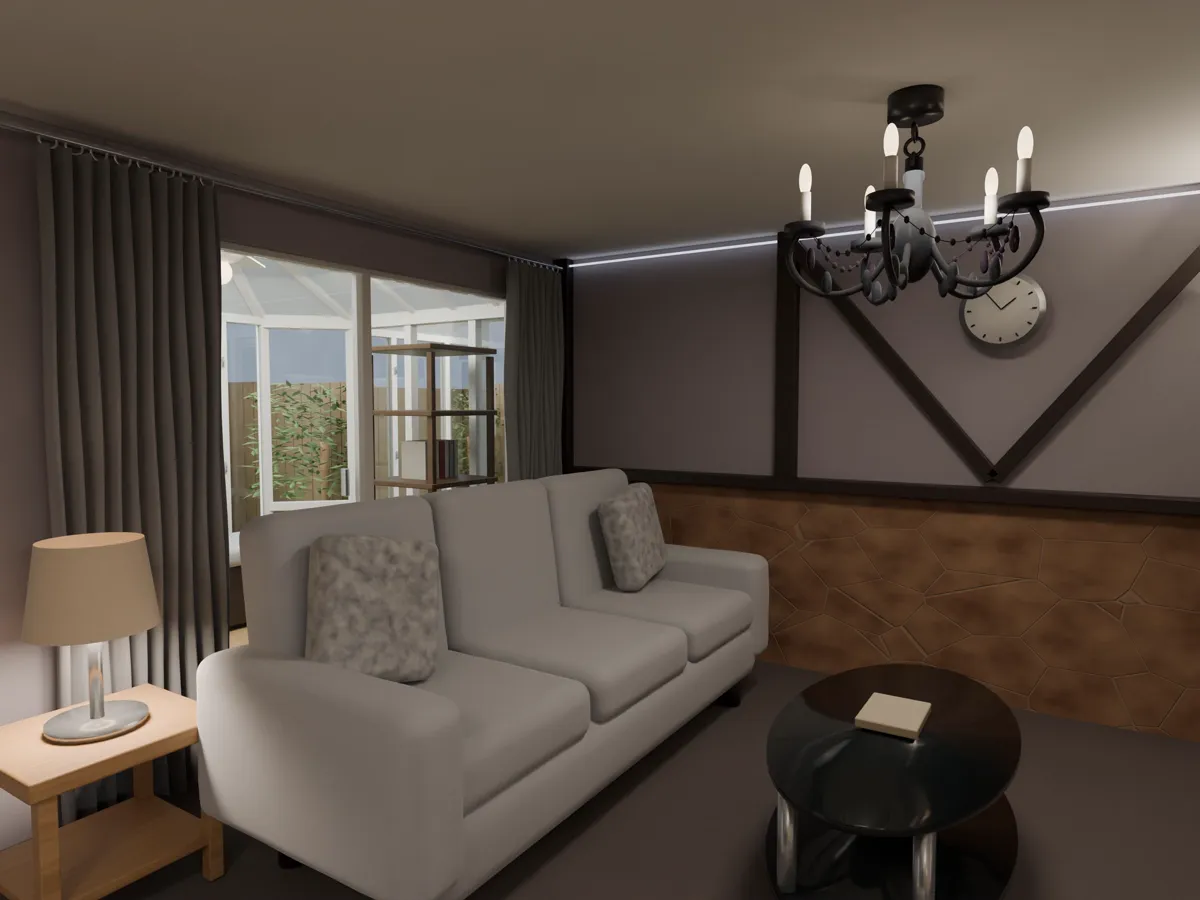
A furnished lounge with a grey sofa, dark ceiling beams and a conservatory beyond, shown as a 3D visualisation
The site shows a real home’s ground floor across all 20 views.

Automated 3D Architectural & Asset Visualisation Pipeline

Live

The same capability, built for portfolios: spatial modelling scripted in Blender and Python.

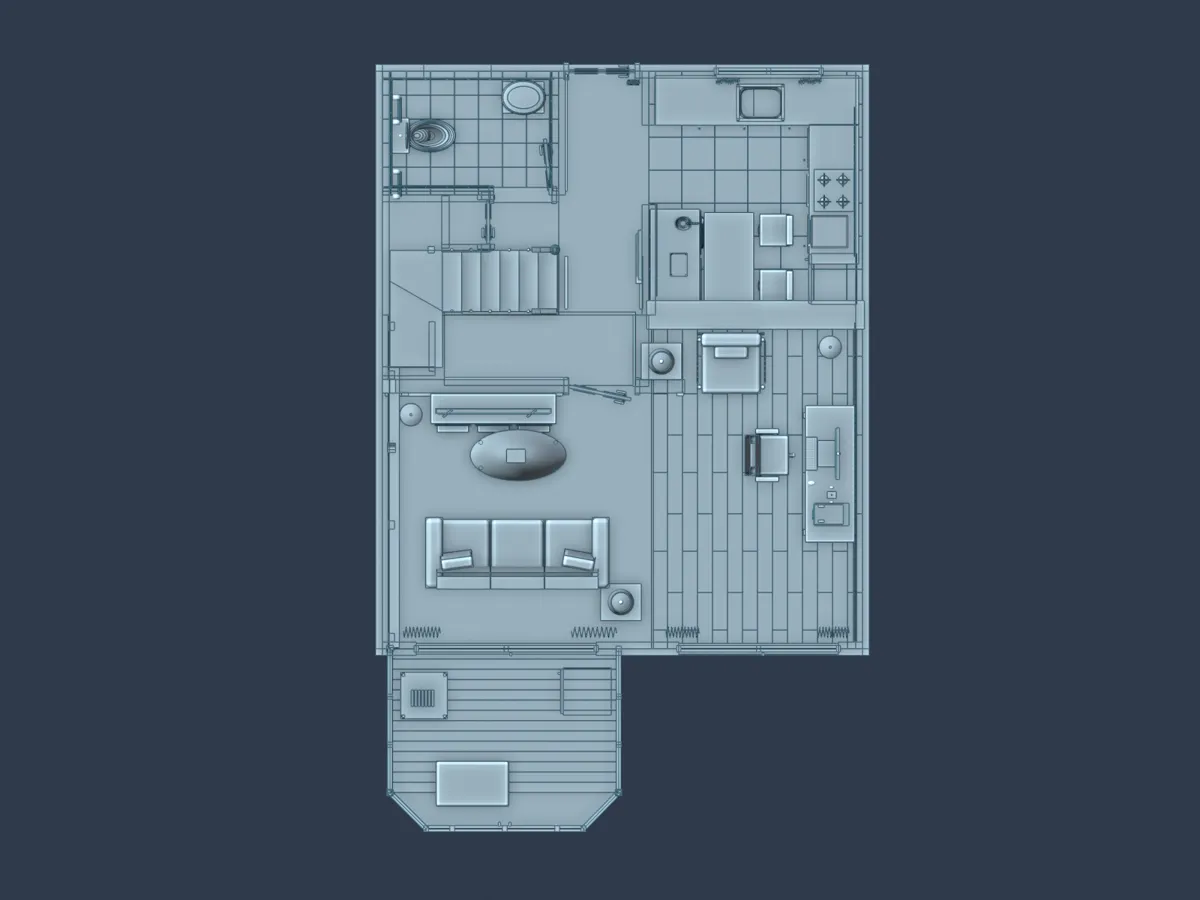
Floorplans, survey data and reference photography go in; spatial models, architectural cutaways, orthographic sections, M&E and retrofit visualisation and interactive web presentation come out. The pipeline is programmatic, so the same inputs produce the same outputs and the route from source material to image stays traceable. Where a dimension is estimated from photography rather than measured, the output keeps it visually distinguishable — a reconstruction is not a measured survey, and the site says so plainly.

What it proves

  • Blender and Python automation
  • Pipeline engineering
  • Traceable repeatable workflows
  • Interactive web presentation

ApplicationsAsset and portfolio communication · Retrofit and M&E visualisation · Digital twin foundations

A straight-down orthographic section through a ground floor, showing the rooms, the stairs and the wall between the living room and the recess beside them

Orbital Fortune

In development

A single-player space trading game where the market moves because the stock does.

One star system, finite stock that doesn’t quietly regenerate on a timer, and prices that move because supply moves. Five rival AI companies work the same market you do, across four routes: trading, mining, passengers and contracts. Ship fitting, modules, reputation, loans and crew sit underneath it, and the current build’s win condition is simple — first to 1,000,000 cr profit, minus loans.

What it proves

  • Economic simulation
  • Rival agent behaviour
  • Game systems design
  • Audio and trailer production
A battered cargo ship riding streams of golden solar wind above an orange gas giant
There’s a trailer, and a trade-radio feature called The Long Haul. Still a work in progress — no launch date.

VibeHelm

Coming 2027

Not available yet. Coming 2027.

Six AI coding agents, side by side, on your own plans and keys.

A multi-agent workspace for vibe coding, built for Windows 11. Run up to six coding agents at once — Claude Code, Codex, OpenCode, Antigravity, Cline and MiniMax Code — across seven modes: Vibe Code, Collab, Face Off, Benchmark, Studio, Deadline and Indie Studio. It’s built for people who build by prompting agents, usually solo or in very small teams, and it runs on their own plans and keys.

What it proves

  • Desktop application engineering
  • Multi-agent orchestration
  • Windows 11
  • Our own tooling
Six seats · Seven modes VibeHelm

Client work

We build this for other people too

The five above aren’t a hobby shelf. They’re the proving ground.

Everything on this page was specified, built, finished and put live by Datum Foundry Nine. That’s the point of showing them.

A multiplayer game that keeps private and shared state straight across four phones and one screen is a distributed state problem wearing a dinner jacket — and with Cecil we didn’t build it once, we commissioned two independent implementations from one brief, ran them side by side and judged them on play rather than on preference. That is how we de-risk anything we’re not certain about: build the options for real, compare them on evidence, commit once. An economy with finite stock, moving prices and five rival companies trading against you is modelling — the same modelling a business wants when it asks what happens if demand shifts. A Blender and Python pipeline that turns floorplans into traceable spatial models is automation engineering, and the discipline of keeping estimates distinguishable from measurements is the same discipline that stops a dashboard overstating what it knows. VibeHelm is six AI agents running in parallel without standing on each other — orchestration, on the desktop, in production.

And all of it went from idea to live site. That’s the part most portfolios skip.

So when you hire us, you’re hiring the hands that did that.

Not sure which of the three it is? Describe the problem in plain English. We’ll tell you.

Got something you want built?

Tell us what it needs to do. Plain English is fine — no brief required, no jargon needed.

Websites, software, games, visualisation, AI and automation. If it’s close to any of the work on this page, we’ve probably already solved part of it.

Every email is read and answered by a person, usually within 24 hours. No autoresponder, no ticket number — a straight answer on whether it’s something we build, and what the next step looks like.

Datum Foundry Nine · Joshua Hunt, Founder · United Kingdom